
I don’t mean to rain on your parade, but you’re probably not the first to think of that. Your idea is nothing special. But do not let that get you down. You still have a chance to set yourself apart from others through the execution of your idea. You still have a chance to approach the same problems and same needs in different ways. You still have a chance to communicate your idea better than the next guy and share it well with others. In an age “without original ideas,” you must move forward regardless. Do not preoccupy yourself with the dream. Execution is key. Get busy.
Category Archives: Film
Regular Programming [Film Friday]
I’ve learned from blogging and observed the same results from others: releasing content daily dramatically increases your chances of attracting new and returning audience members. How do you think television and radio built so much traction in the first place? When audiences can expect to find you at a certain time or place, it lubricates the exhibition of your content and dramatically reduces marketing costs. You build a relationship with your audience over time, and keep them coming back for more.
By committing to releasing content regularly, you also dramatically increase your chances of producing a hit. 5 Second Films have produced so many short films and told so many jokes that the handful of hits they’ve had propelled the group into web virility.
If you cannot produce enough content to release daily, then commit to releasing content “regularly” – and publicly define the recurring time frame through which they should expect new content (weekly, monthly, every third Tuesday, etc.). At least some level of audience expectation makes a huge difference for audience retention.
Random splashes are risky and expensive to promote. Arbitrary releases rarely build traction. Do not bet on it. Consider curating an audience and regular programming instead.
Advertise What You’re Advertising
I appreciate the need to launch marketing spots or materials to build brand awareness. But when you want to drive attention to a product, then make sure you . . . drive attention to your product. I am astounded by the number of designs, commercials, prints, and public gimmicks I see on a daily basis that fail to clearly communicate the product they mean to sell. Every good marketing campaign should tell a story, make the product clear to the customer, and clearly articulate where the customer can find the product.
For the last several weeks, my company has been running a spot for our latest web series on national television. Perhaps you’ve seen it? The spot is failing to communicate that it’s a web series that you should watch online. Am I crazy?
Feed Your Team
An army marches on its stomach. Food boosts morale, energizes the mind, and rewards your team. Food is more magical than money. I am convinced through my experience that feeding your team is one of the keys to success. I calculate catering and craft service into my film budgets before any other line item. Not only is your team happier on a full stomach, they tend to stick around the office and get more work done. The traditional hour lunch break sends everyone off into the world and away from each other, making it difficult to get back into the gear of tasks at hand.
Afraid that feeding your team may be too expensive? Think instead about the productivity costs associated with sending your team outside for an hour lunch break. It will take an individual between 10 and 20 minutes to reach a destination for lunch, between 20 and 35 to eat, 10 to 20 to return, and as much as 30 minutes to get motivated again. On average, the hour lunch break could cost you as much as one and a half man-hours per employee per day. For a ten-person team with $60,000 salaries each, that’s $430 a day – over $2,000 per week! You could more than cover the costs of a caterer for the same price.
Find a way to pay for it. Feeding your team may be an added expense unaccounted for in your overhead and payroll costs, but the work output benefits are tenfold. Yum.
Proof Your Graphics
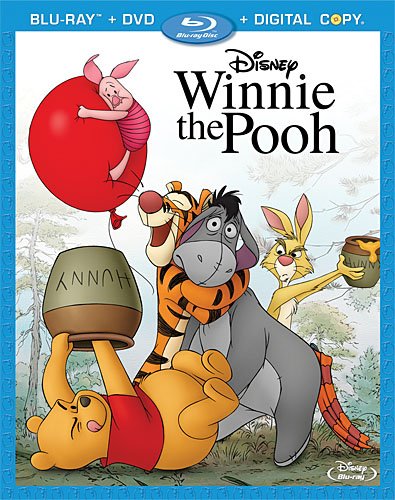
Like proofreading published text, it is important to run your graphic work by others before release. If you can, run it by a few members of your audience. Make sure the people you run it by are honest people.
Take, for example, the Winnie the Pooh Blu-ray cover. Can someone please tell me what Eeyore is doing with both of his hands?
The Economy of Favors [Film Friday]
Especially in low-budget filmmaking, favors can be essential to bringing a vision to life. Favors can help you fill missing pieces, augment talent, cover logistical needs, give you a foothold for success, and so much more. Most of all, favors can inspire long-lasting collaborations. BUT (and it’s a big BUT) – favors must be reciprocated. Promises must be returned. Or you may eventually find yourself without help. You can only last so long on false promises. Your project or company cannot sustain itself on favor poaching.As with all mutual relationships, there must be a give and take. A paycheck isn’t enough. Offer favors, accept favors, and follow through with your promises. Exchange a little, then exchange some more. Favors can make friends.
But make sure you follow through.
Hollywood Is like the Army [Film Friday]
Only without honor and push-ups. There’s a high level of discipline (though not necessarily the same caliber of punishment). There’s a system of rank and rigid hierarchy, especially on set. There’s a delicate network of specialized soldiers – and the brigade is only as strong as its weakest link. But unlike the army, Hollywood uses ego and opinions instead of bullets to survive.
Dry Spells [Film Friday]
People working in Hollywood are looking for work regularly: when a show wraps, it’s time to find a new job. Like all freelancing, entertainment industry folks run the risk of suffering weeks or months between projects. Even people who make as much as $10,000 per week file for unemployment between jobs. It’s crazy. Having had a steady paycheck for the last 14 months, I cannot imagine the day-to-day challenge of finding work. It’s a whole different world. For the people who work regularly, it can be great. For those who don’t, it can be hell. All you can do is get out, enjoy the California sunshine, chase personal projects, and keep busy. Learn to appreciate the dry spells. After all – the second you learn to love them, they’ll end, and you’ll be buried with work again.
Running a Studio vs. Production Company [Film Friday]
Most businessmen and women in Hollywood think they have what it takes to build the next big label. Most producers think they know better than the studios and can do one better. But there are fundamental differences between building a studio and building a production company.
Production companies see life picture to picture and rarely lock their future in place. Some production company heads have long-term goals, but most are contingent on the success of the company’s material slate. That’s true for all content creators, but production companies fall short by investing all eggs in the movie basket.
Studios take a bigger piece of the pie. The difference between production companies and studios? Studios have assets and scope. Successful studios operate more like landlords and parents than artists or producers. They own backlots, prop houses, sound stages, post production facilities, restaurants, libraries, other companies, equipment, hardware, software, websites, networks, satellites, and more. A sizable portion of the sustainable revenue comes from operating and renting out these assets. Furthermore, most studio executives speak in slates and four year periods. They work hard to see into the future and see past the big fat movie release in front of them. Strong studios invest in things other artists use to tell stories, and they also invest in long-term strategy.
Are you in it for the movie game alone? Or are you in it for the big picture? The long haul? Decide what you want to build. Do not lie to yourself about what you care about.
My First Commercial [Film Friday]
Please enjoy my first experience directing a commercial. I co-directed this spot with Justin Hamilton for friend Jason Nava’s JNAVA clothing line. Nathan Peña shot the piece and Taylor Gianotas edited it. Lifestyle, sex appeal, and cigarettes. What more could you want from a web commercial?
 Craig Ormiston